


PUBLISHED: | UPDATED:
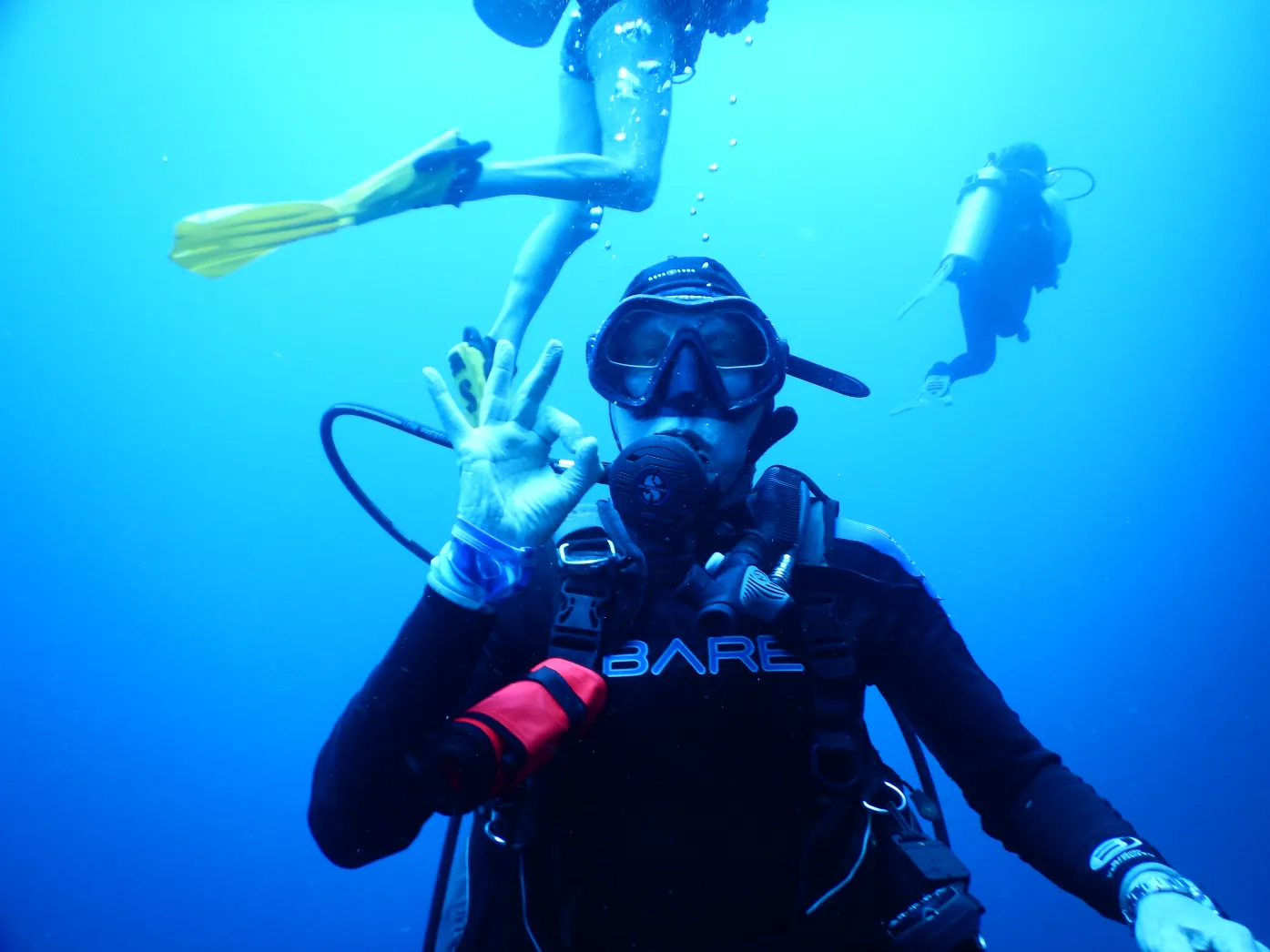
Marin resident Gil Zeimer has been scuba diving since 1981. (Photo by Kathleen Calder)
Gil Zeimer is one of the most prominent and prolific figures in the small but thriving world of scuba journalism. A retired advertising copywriter and a certified diver since 1985, the 77-year-old San Rafael resident quickly found that the audience-hooking humor required for his main gig translated easily to writing about his dives.
“Almost everything to see in advertising these days, especially on TV, is humor,” Zeimer said. “Every commercial you see about beer, every commercial you see about cars, every commercial you see about insurance, all use humor to hook the viewer. The headlines I was writing in advertising translated to the types of headlines I wanted to write in my stories.”
Browse the table of contents for his new book “Scuba Storyteller: Mostly Humorous Diving Tales by an Addicted AquaNut,” available now on Amazon, and you’ll see headlines like “Warm Memories of Hypothermia” and “A Little Kelp From My Friends.” These, along with his striking ledes, have defined Zeimer’s style since he started contributing to scuba magazines in 1994.
Zeimer will discuss and read selections from “Scuba Storyteller” at 7 p.m. Thursday, June 25, at the Marin Diving Center at 3765 Redwood Highway in San Rafael. Admission is free.
Zeimer has contributed to more than 25 publications, including the Marin IJ, where he was the community reporter for Belvedere and Tiburon in 2017 and 2018. He claims a 95% success rate for his pitches, which he attributes both to the relative smallness and specificity of the scuba-journalism niche — Zeimer estimates there are “several hundred” active scuba writers — and his jovial, jocular writing style.
The latter aspect of his work is what initially appealed to Beth Peterson at Best Publishing Company, which primarily publishes textbooks and other more technical volumes about scuba and was looking for something more friendly to the casual reader.
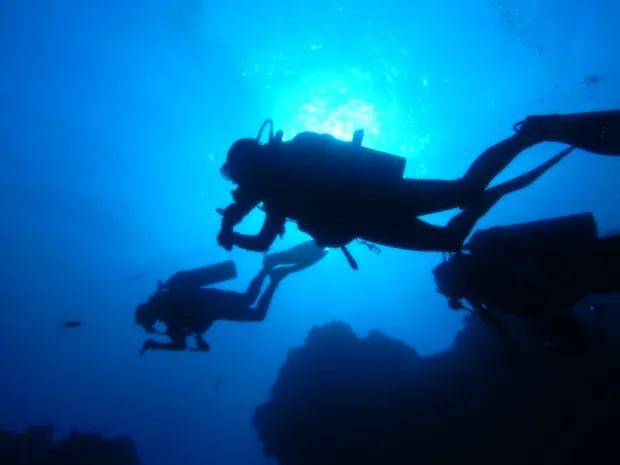
Marin resident Gil Zeimer is keen to emphasize the safety of scuba diving, an activity he says one can do at any age. (Courtesy of Gil Zeimer)
“Beth Peterson said, ‘We’ve been looking for a humorous book about diving, and there haven’t been any, and now we’ve met you,’” Zeimer said. “So this has become the fastest-selling humorous book about diving for this publishing company. It’s also the only book that’s humorous about diving (for the company).”
“Scuba Storyteller” is packed with puns and other jokes, but it’s also thoughtful about diving and knowledgeable about its history. One piece features interviews with divers who dive to locate the wreckage of slave ships sunk during the Middle Passage. Another grapples with the legacy of “Jaws,” Steven Spielberg’s 1975 shark-attack blockbuster, which severely curtailed the scuba industry after its release.
“For a year or two after the movie came out, people were afraid to dive because of sharks, and it almost killed the industry,” Zeimer said. “Ironically, a lot of people who were involved with the movie became shark conservationists and shark protectors.”
Scuba has changed quite a bit since Zeimer took his first dive at Grand Cayman in 1981. For one, it’s easier and safer, thanks to the introduction of new technology over the years.
“The biggest difference is the dive computer,” Zeimer said. “In the early days, we would go by the U.S. Navy charts of how long you could dive at a certain depth before you had to come up. And now computers attached to your air supply calculate everything in real time and show you the depth you’re at, how much air you have left, the water temperature, and so on. They’re very, very streamlined.”
The scuba community’s environmental consciousness has also grown substantially since the days of Jacques Cousteau, whose 1943 invention of the Aqua-Lung made scuba diving possible and whose 1956 documentary “The Silent World” includes footage of Cousteau and his crew wantonly slaughtering sharks and blowing up coral reefs to expose their interiors. In one piece in “Scuba Storyteller,” Zeimer discusses a dive in 1989 in which he hitched a ride on the back of a manta ray, something now known to be environmentally damaging.
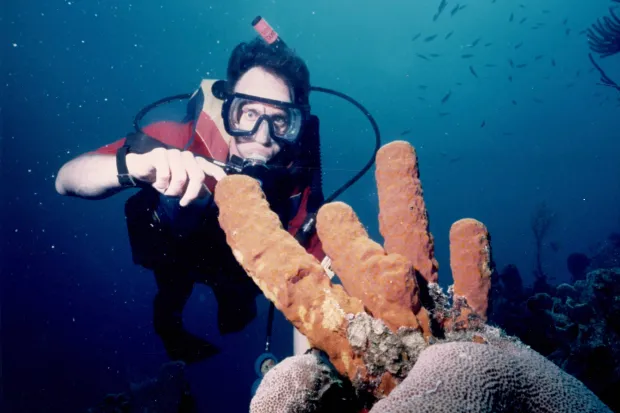
Gil Zeimer in Belize in 1987. (Photo by Paul Humaan)
Scuba has gone through fluctuations in popularity over the years, and Zeimer predicts a forthcoming period of apprehension following the deaths of five Italian divers in the Maldives in the Indian Ocean last month.
“When something like that happens, it’s a black eye on the diving community,” Zeimer said. “There are between 6 and 8 million divers worldwide. When things like that happen, it’s not the fault of the diving industry. It’s the fault of one individual who took a risk with people who weren’t fully aware of the risks. You can’t just strap on a tank and say, ‘I’m gonna go into this cave.’”
Zeimer is keen to emphasize the safety of the sport and has actively engaged in efforts to promote it, participating in the Blue Friday initiative, an alternative to Black Friday that encourages communion with nature and the ocean over materialistic madness. He also emphasizes that scuba’s cost for entry is lower than people might expect; the price of an open-water certification class for beginning divers at the Marin Dive Center is $236.
“Sylvia Earle in Alameda is 90, and she still dives,” Zeimer said. “Several of my friends are in their 80s, and they still dive. It’s something you could do at any age.”
Comments are closed.